
After difficult experiences, your nervous system can sometimes feel like it is still on high alert.
Strong emotions may come quickly…even when part of you knows you are safe.
You may just want to feel more settled, without having to fight your reactions all the time.
NeurOptimal®, the neurofeedback system we supply, works with your brain rather than trying to tell it what to do.
It isn’t about revisiting what happened or telling you how you should feel about it.
Instead, it gives your brain information about itself, allowing it to respond wherever it needs to.
During a session, this information is provided through simple interruptions to the music.
Then your brain makes any adjustments it wants to make. It is in control of the whole process.
This can support greater self-regulation, so strong emotions may feel easier to navigate when they arise.
So you remain uniquely you…just hopefully feeling more settled within yourself. All from the comfort of your home…
What is Neurofeedback at home?
Neurofeedback is essentially brain training, and it is also referred to as neurofeedback therapy.
We supply the Neurofeedback system NeurOptimal® Australia-wide to make it easy for everyone to access at home.
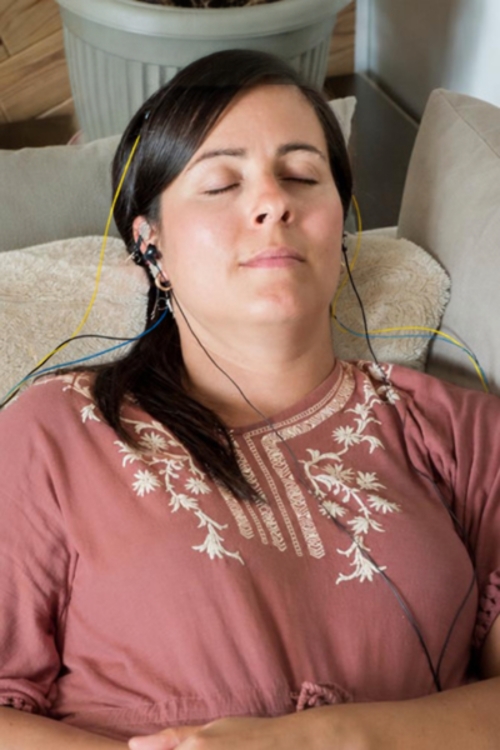
It is a simple device that uses E.E.G sensors to help your brain & central nervous system learn more about how it functions.
Think about it like a mirror, where your brain can start to learn about itself for the first time.
The process is straightforward:
1. There are 5 sensors placed in the same positions on your scalp & ears each session. These observe your brain’s natural electrical activity.
2. The sensors relay that information to the computer program. The program then tells your brain what’s going on by interrupting music you are listening to.
3. You hear the interruption, and your brain interprets the break in the music as key information.
4. Your brain learns more with each session and can change itself in a very natural way without you needing to do anything.
Anyone can benefit. NeurOptimal® is in 84 countries and has been in use for 25 years, so it has helped many people worldwide who suffer from ADHD symptoms.
We Express Post our NeurOptimal® Neurofeedback Rental Kits with everything you need to do neurofeedback brain training at home minutes after receiving it!
Move through Trauma with NeurOptimal®
Trauma can leave your nervous system feeling stuck on high alert.
Strong emotions and reactions can become difficult to settle.
NeurOptimal® can support your brain’s natural ability to self-regulate.
Helping you move towards a calmer, more regulated nervous system.

Trauma can completely dysregulate the nervous system, pushing it into patterns of responding that can continue long after the original experience has passed. Left unresolved, these patterns can create additional stress and increase the risk of making decisions or reacting in ways that create more problems along the way.
NeurOptimal® Neurofeedback works with the central nervous system by providing it with information about what it is doing in real time. This gives the brain new information it can use to self-organise and regulate, without you having to consciously work out what needs to change.
It can feel a little like giving your brain a helping hand, or even a cheat code, so you don’t have to do all of the heavy lifting yourself.

Trauma can hold you down when it is left unaddressed. You can spend months or even years ruminating on what happened and why, without feeling like you are actually moving forward. It can be difficult to get out of that pattern because it feels like your own brain is working against you. You feel stuck.
NeurOptimal® Neurofeedback can help interrupt this pattern by reflecting information back to the brain, almost like a mirror showing it how it is functioning in real time. The brain can then use that information to make its own adjustments and self-organise.
Clients have reported finding it easier to stop going over the same things, allowing them to let go of what no longer needs their attention and begin moving forward.
Emotions can be one of the hardest parts of trauma. They can feel confusing and very, very scary. Trauma can intensify emotions that are already there, while also creating an environment where feelings that have been sitting under the surface begin to come up, sometimes making things feel more painful before they settle.
NeurOptimal® Neurofeedback can help support you through this time of processing by giving the brain information in real time that it didn’t have before. As you experience and work through those emotions, your brain is receiving information about how it is functioning and can use that information to self-organise.
Clients have reported feeling like they have more space around their emotions, helping them move through difficult feelings without becoming quite so consumed by them.

Trauma can intensify feelings of anger or of having been wronged. If left unchecked, that anger can sometimes bleed into other relationships, affecting people who weren’t part of what happened and creating new problems that can leave you feeling even more upset.
NeurOptimal® Neurofeedback can help by giving your brain information it didn’t have about how it is functioning in real time. The brain can then use that information to self-regulate and make its own adjustments.
Clients have reported having more space around their emotional reactions, allowing feelings of anger to still be felt without automatically being directed towards someone else. This can make it easier to experience the emotion, understand it and choose what you want to do with it.

When you have survived a traumatic experience, you can feel so low that it is difficult to imagine ever feeling genuinely happy again. It can seem like the weight of everything that has happened is sitting on top of the lighter parts of you that used to come through naturally.
NeurOptimal® Neurofeedback can help the brain self-organise by offering it information it didn’t have before. As some of the stress and mental clutter begins to clear, there may be more room for the natural feelings of happiness that have been sitting underneath to come through again.
We have had trauma-affected clients specifically describe this experience as, “It was like a well that just came up unexpectedly!”

You have been affected by what happened, and your children may have had some exposure to it too. But that doesn’t mean you don’t want to do everything you can to prevent the effects of that experience from being carried forward into their lives.
NeurOptimal® Neurofeedback can be a source of support during this difficult time, helping your brain self-regulate as you work through what has happened. And if your children have been affected too, they can also use the system.
Our rental packages allow anyone you nominate to use NeurOptimal®, meaning the system doesn’t have to support just one person. It can give everyone affected an opportunity to work on their own regulation, so you can move forward together as a family.

The time is going to pass regardless. If each day is feeling harder than the one before, it is understandable to worry that everything may continue to compound and become even more difficult. Sometimes you need something that can help stop-gap the situation now, while you continue working through the bigger picture.
NeurOptimal® Neurofeedback can help support your brain during this time by giving it information it can use to self-organise and regulate. This may help take some of the weight out of everyday life so that each day begins to feel a little lighter.
Clients have reported gradually having more good days than difficult ones. With time, the aim is for those better days to stop feeling unusual and start becoming your new normal.

Rest and good quality sleep are important when you are dealing with trauma. Your nervous system may be processing a lot of heavy emotions and experiences, and sleep gives the brain an opportunity to process, organise and consolidate what has happened. Unfortunately, sometimes the hurt and heightened alertness caused by trauma are the very things preventing you from getting that rest.
NeurOptimal® Neurofeedback can help by giving the brain information about itself that it may be missing. The brain can use this information to self-organise and regulate, potentially helping with both the underlying mental turmoil and the ability to switch off at night.
Clients have reported deeper, more restful sleep, giving their brain and body more opportunity to recover from everything they are carrying.
Quick Questions...
When you’ve worked hard to feel safe, stable and emotionally balanced, it’s understandable to worry about losing the progress you’ve made.
NeurOptimal® doesn’t require you to revisit traumatic memories, talk about painful experiences or relive anything from your past. You remain in control of your training and can pause or stop a session whenever you need to.
Some people report feeling less emotionally connected to past pain, while others notice old feelings or unresolved emotions coming to the surface, which they may choose to explore and process with support. This doesn’t necessarily mean you’re regressing. We’ll support you throughout your rental, and if anything feels uncomfortable or overwhelming, you can slow down, take a break and speak with your treating professional.
NeurOptimal® does not diagnose or treat medical conditions, and it does not force your brain into a particular state. It provides your brain with information about its own activity and allows it to respond naturally.
The only negative side-effects we have seen in our 7 years in business (and we have worked with hundreds of clients) was two with a mild headache which didn’t last past the second session, and two clients who had a rubbish night’s sleep the first night. All of these were long term clients all who ultimately had incredible results.
We pride ourselves on being open and gathering as much feedback from clients as possible and this is the extent on the negative ‘blips’ we have witnessed.
Sometimes, yes. Traumatic experiences can leave difficult feelings sitting beneath the surface, even when you’re doing your best to move forward.
Some people find that NeurOptimal® helps them feel less emotionally connected to past pain, allowing those feelings to fade into the background. Others report that unresolved emotions come to the surface, giving them an opportunity to acknowledge and process what they’ve been carrying. NeurOptimal® may also support greater emotional resilience, making these experiences feel more manageable.
Gema has personally been through this process and understands how confronting it can sometimes feel. She’ll be there to support you throughout your rental, so you don’t have to navigate the experience alone. If difficult feelings become overwhelming, we also encourage working alongside a trauma-informed professional.
Possibly, although it doesn’t happen to everyone. Sometimes painful experiences and the emotions attached to them remain beneath the surface, even when we’ve tried hard to put them behind us.
For some people, finding freedom from trauma involves safely facing and processing the emotions they’ve been carrying, rather than continuing to push them away. This doesn’t mean you need to relive what happened or force painful memories to surface.
Some people find that NeurOptimal® helps them feel less emotionally connected to past experiences, allowing those memories to fade into the background. Others notice unresolved feelings coming to the surface. As emotional regulation improves, they may feel more resilient and better equipped to work through those emotions.
Gema has personally experienced this process and understands how vulnerable it can feel. She’ll support you throughout your rental, and you can slow down or pause training whenever needed. Working alongside a trauma-informed professional can also help you process difficult feelings safely.
Naturally, we can not predict that as a certainty, but other clients have found the changes to their brains have resulted in increased feeling of calm; even in daily chaos.
NeurOptimal® is essentially offering the brain information it did not have before that the brain uses to self-organise.
Think of a cluttered room that feels overwhelming; as it is organised, you feel more calm. This is similar to the feeling you may have in your brain using NeurOptimal®.
No, NeurOptimal® doesn’t target specific memories or traumatic events. It takes a holistic approach, providing your brain with information about its overall activity rather than focusing on one particular experience.
However, as your brain becomes better at self-regulating, you may notice changes in how you respond emotionally to that event. Some people report that painful memories begin to feel less intense or have less influence over their daily lives.
You don’t need to talk about what happened or revisit the experience during training. Your brain receives the feedback without needing to consciously focus on the trauma.
Even if your trauma relates to just one area of your life, its effects can sometimes extend into other areas without you realising it. Stress, emotional reactions, sleep, relationships and concentration can all be influenced by how your nervous system responds.
NeurOptimal® takes a holistic approach. It doesn’t target one particular memory or experience. Instead, it provides feedback about your brain’s overall activity, supporting its natural ability to self-regulate.
You may notice changes beyond the area you originally wanted help with, such as feeling calmer, sleeping better, having more patience or responding differently to everyday challenges. Everyone’s experience is different, and improvements aren’t guaranteed.
In our experience, yes. Many clients come to NeurOptimal® hoping to improve one area of their life, but notice positive changes in others too.
Because NeurOptimal® supports the brain’s overall self-regulation rather than targeting a single problem, clients may notice improvements in their sleep, emotional resilience, relationships, concentration and ability to handle everyday stress.
Sometimes it’s the combination of these smaller changes that makes the biggest difference. Feeling calmer, reacting less strongly and having more energy for the things that matter can contribute to a better quality of life overall. Results vary from person to person.
What clients are saying...

Ginnie Rossini
“It has been more effective than any other therapy or medication I’ve tried in helping me regulate and process strong emotions.
The difference it has made is incredible—I now have more time between a stimulus and my response, which allows me to handle situations with a much calmer and clearer mind…”
NeurOptimal Neurofeedback through Neurofeedback Rentals has truly been a life-changing experience for me. It has been more effective than any other therapy or medication I’ve tried in helping me regulate and process strong emotions. The difference it has made is incredible—I now have more time between a stimulus and my response, which allows me to handle situations with a much calmer and clearer mind.
Every facet of my life has improved, from day-to-day living to bigger life decisions. For example, my partner and I are now planning an overseas move—something I would have never even considered before starting neurofeedback. I’m also able to articulate my feelings and communicate my needs so much more effectively, which has strengthened my relationships and improved my overall sense of well-being.
I cannot recommend neurofeedback enough for anyone seeking deeper emotional balance and personal growth. It has genuinely transformed my life, and I’m so grateful to have found this path.

Jaclyn Bell
“We’ve been using the neurofeedback system for about 12 sessions and have noticed a huge improvement in both myself and my son. I feel much more relaxed and calm, and my son’s strong emotions during separation have significantly subsided.
The system was very easy to use, and the instruction manual made everything simple to understand. I highly recommend this for anyone looking for a natural and effective way to support emotional well-being!”

Greg Frerson
“Gema from Neurofeedback Rentals was a delight to deal with. Her communication and understanding my needs was second to none.
The system was easy to use and for myself who has been diagnosed with PTSD and ADHD, received noticeable improvement.”

Kylie Jayne
“The service was excellent- fast turn around time and I received in the post the very next day. Gemma was lovely to deal with, and I saw a good result using the neuro feedback machine for a month. Highly recommend for anyone dealing with ptsd, adhd.”

Matthew Wilson
“I had a great experience with Neurofeedback Rentals.
Let’s say it was a life changing experience for me personally 🙏
I would highly recommend Gemma and her Company to anyone out there that is looking for some healing in their lives no matter what age you are.”











Quick Questions...
You don’t need to untangle everything you’re going through before you begin. NeurOptimal® takes a holistic approach, supporting your brain’s natural ability to self-regulate rather than asking you to tackle each problem separately.
There’s no need to explain your experiences, revisit painful memories or work out where to start. You can simply relax during your sessions and let your brain respond to the feedback.
In our experience, clients sometimes notice improvements across several areas of life. You can take things at your own pace, and we’ll be here to support you along the way.
Yes. You can use NeurOptimal® while taking medication.
Medication primarily affects the brain through chemical processes, such as changing the activity of neurotransmitters like dopamine and noradrenaline. NeurOptimal®, on the other hand, observes the brain’s electrical activity through EEG.
But these are not completely separate systems. Chemical signaling affects how neurons behave electrically, so medication can influence the collective electrical activity being observed during a session.
NeurOptimal® observes your brain activity as it is occurring at the time, so your medication forms part of your current brain state during a session.
Importantly, the underlying brain is still capable of learning and making changes while medication is present.
These changes are not necessarily dependent on the medication remaining in your system, so reducing or changing medication does not mean the brain simply returns to exactly where it started – meaning if you come off the medication your brain the time spent has not been wasted.
While using NeurOptimal®, if you begin to feel different or think your medication needs adjusting, speak with your prescribing doctor before making any changes.
We recommend checking with your prescribing health practitioner, before you use NeurOptimal®.
You can start by forwarding this link for the NeurOptimal® website to your practitioner for review. You can also encourage them to reach out to us directly on 0474 319 467.
If they need more information, we are happy to provide anything as required.
You can still use NeurOptimal® while dealing with a stressful environment, but your safety comes first. We want to make sure both you and our equipment are in a safe, secure space before arranging your rental.
NeurOptimal® may help support your emotional regulation and resilience while you’re navigating difficult circumstances. However, it can’t remove the source of stress or make an unsafe environment safe.
If you’re currently experiencing threats, violence or intimidation, we encourage you to prioritise your safety and seek appropriate support. We can discuss your circumstances privately to see whether a home rental is suitable for you.
It’s not too late, and experiencing trauma doesn’t mean your brain is broken.
The human brain is very adaptive and can change at any stage of life.
Your brain may have just adapted to difficult circumstances in ways that helped you survive, even if those responses are now making everyday life harder.
NeurOptimal® aims to support this natural capacity for change and self-regulation, without requiring you to revisit painful experiences.
In our experience, people who have struggled for many years can still notice positive changes. Your past doesn’t have to determine how you feel in the future.
It’s understandable to worry that you’ll be the exception, especially if you’ve already tried so many things without success.
NeurOptimal® is used in 87 countries around the world, with thousands of users reporting positive experiences and meaningful changes in their lives.
In our experience, people respond at different speeds and in different ways.
We’ll help you track your progress and make the most of your training, without putting pressure on you to achieve a particular outcome.
NeurOptimal® is a form of non-linear neurofeedback that many psychologists may not be familiar with. It’s different from traditional talk therapy and isn’t widely included in mainstream psychology training.
We have many client who use NeurOptimal® can be explored alongside their existing therapy, rather than replacing it.
You don’t need to choose between the two, and we encourage you to discuss this with your psychologist.
The biggest thing that can hinder your progress is inconsistent training. We recommend completing 5–6 NeurOptimal® sessions per week to give yourself the best opportunity to notice results.
We also recommend avoiding other frequency-based or brainwave entrainment therapies during your rental, such as Solfeggio frequencies, RIFE devices or Binaural Beat programs – basically entrainment devices.
Using several approaches at once can make it difficult to understand how you’re responding to NeurOptimal® but the most important part is how you feel, so try everything and remove what is not working.
Keeping your training consistent and your routine simple will help you track changes more clearly. If you’re using other therapies, let us know so we can discuss how best to approach your rental.
The best thing you can do is stick to regular, consistent training. We recommend completing 5–6 NeurOptimal® sessions per week, with 1–2 rest days, to give yourself the best opportunity to see results.
Use the tracking sheet we provide to notice changes in your emotions, reactions, sleep and everyday life. Sometimes progress is gradual, and small improvements can be easy to overlook.
You don’t need to force anything or work harder during your sessions. Simply show up consistently, give yourself time and allow your brain to respond at its own pace.
You can use NeurOptimal® alongside support from a psychologist or therapist. Some people find that neurofeedback complements the work they are already doing.
You may start noticing that things which previously triggered a strong emotional reaction don’t affect you quite as intensely.
You might feel calmer, less overwhelmed or more able to recover after a difficult moment.
Some people describe feeling less connected to past emotional pain, while others notice better sleep, clearer thinking, greater confidence or more capacity to handle everyday challenges.
In our experience, these changes can be subtle at first. We provide a tracking sheet to help you recognise improvements in how you feel, react and function over time.
Nothing is guaranteed, and we’d never promise that NeurOptimal® will deliver a particular result for everyone.
In our experience, many clients report positive changes in their emotional regulation, resilience and overall wellbeing.
However, everyone responds differently, and some people may not experience the improvements they’re hoping for.
Our role is to help you give training your best opportunity to work through consistent sessions, realistic expectations and ongoing support throughout your rental.
How Many Sessions Do I Need?
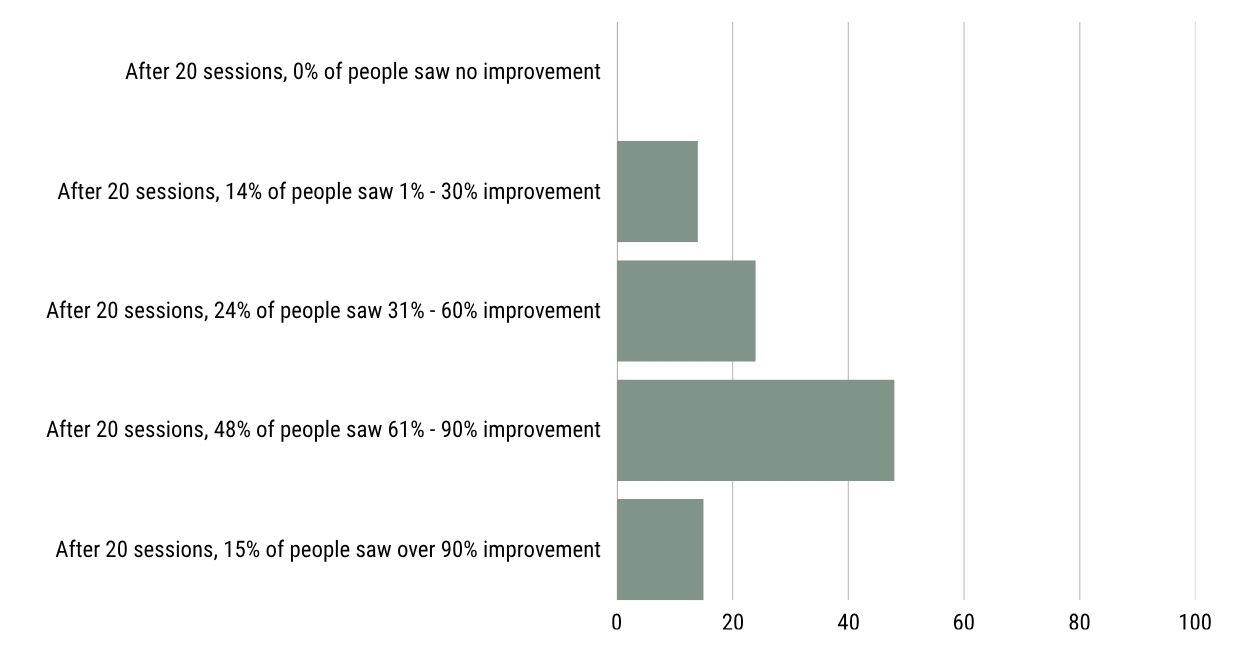
A worldwide survey of all NeurOptimal® trainers was conducted to observe client results.
This looked at the percentage of improvement at a certain number of sessions:
PTSD Improvement After 20 Sessions
After 20 Sessions – 48% of People reported a 61-90% Improvement
Managing Expectations...
The brain & nervous system are very complex structures.
We have had many people have a significant shift within the first few sessions.
Results for other clients take more time.
We encourage all clients to keep in mind that all worthwhile change takes time.
Neurofeedback is brain training and, like muscle training at the gym, it is a process.
Unlike the gym, NeurOptimal® training is fun and painless; so it is easier to stick with!
We are here to make it as simple as possible to reach a positive result.
Quick Questions...
Even if you’ve been carrying trauma for years, it doesn’t necessarily mean it will take years to start feeling different.
In our experience, many clients begin noticing changes around sessions 13–20, although some feel a difference earlier and others take longer.
You might notice feeling calmer, reacting less intensely to triggers or recovering more quickly from difficult emotions.
We recommend training consistently, ideally 5–6 sessions per week. There’s no guaranteed timeframe, but the length of time you’ve been struggling doesn’t necessarily determine how quickly you’ll respond.
The best thing you can do is train consistently. We recommend completing 5–6 NeurOptimal® sessions per week, with 1–2 rest days, to give yourself the best opportunity to notice results.
Use the tracking sheet we provide to recognise small changes in your emotional reactions, resilience and everyday life. Progress isn’t always obvious at first.
If unresolved emotions come to the surface, having support from a trauma-informed professional may help you process them safely.
There’s no need to force progress or push yourself beyond what feels manageable.
We ship Australia-wide via Express Post, with most metropolitan deliveries arriving within 1–3 business days of dispatch. Regional locations may take a little longer.
Delivery depends on system availability, and we’ll provide tracking details once your kit has been dispatched.
Your rental period starts the day after your kit arrives, so you won’t lose any training time waiting for delivery.
In our experience, clients generally start noticing changes around sessions 13–20, although every brain responds differently.
Early improvements might include better concentration, less mental fatigue, clearer decision-making and greater ability to manage pressure.
These may translate into getting through more work, reducing mistakes and maintaining productivity throughout the day.
We recommend starting with a one-month rental, completing sessions consistently and tracking your performance to assess the results.
The aim is to establish a new baseline of performance, rather than needing ongoing sessions indefinitely.
In our experience, once clients reach a more stable baseline, they generally maintain their improvements without regular training.
Sometimes life brings new pressures, such as business growth, major projects or prolonged stress. Some clients choose to rent again during these periods to support their performance and resilience.
We recommend starting with a one-month rental. This gives you time to complete regular sessions, establish a routine and assess any changes in your performance.
Track practical measures such as productivity, concentration, decision-making and how effectively you manage pressure.
At the end of the month, you can evaluate the results and decide whether to extend at our discounted rate.
There’s no need to commit to a longer rental upfront, except to make a longer commitment to your routine and save money.
Not necessarily. More sessions don’t automatically mean faster results. Your brain responds to NeurOptimal® at its own pace.
We recommend training consistently with 5–6 sessions per week and allowing 1–2 rest days. This gives you a regular routine without feeling pressured to do more.
Especially when working through trauma, the goal is steady, manageable progress rather than rushing the process. Consistency is more important than trying to squeeze in extra sessions.
What do I have to do?
You are busy so we have minimised the time you need to invest in the entire process:
Order and Setup
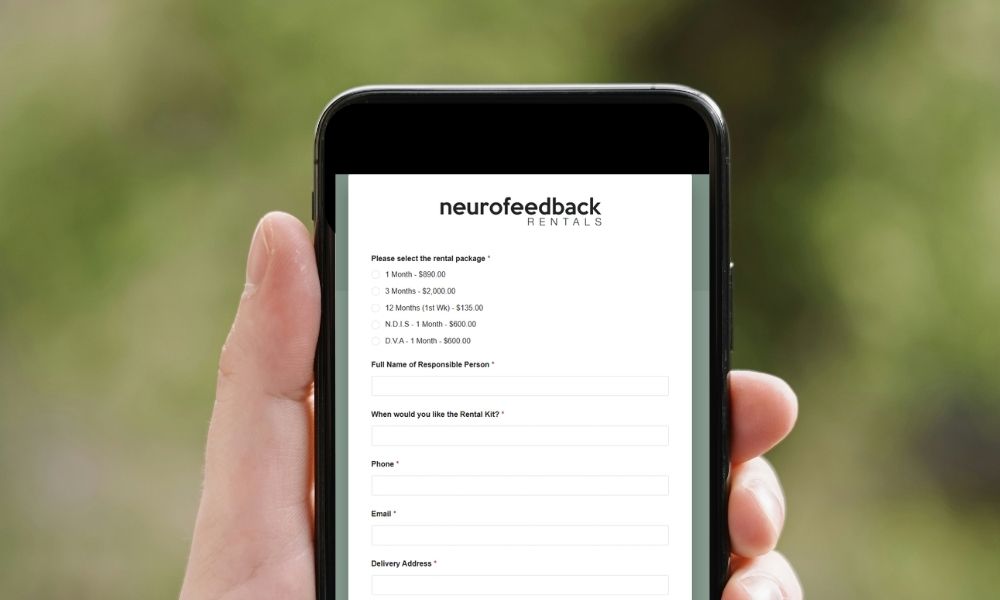
FILL OUT E-CONTRACT & PAY
We have a single page contract to fill in.
Pay via Direct Deposit, Credit Card or PayPal
We pay for Express Post anywhere in Australia
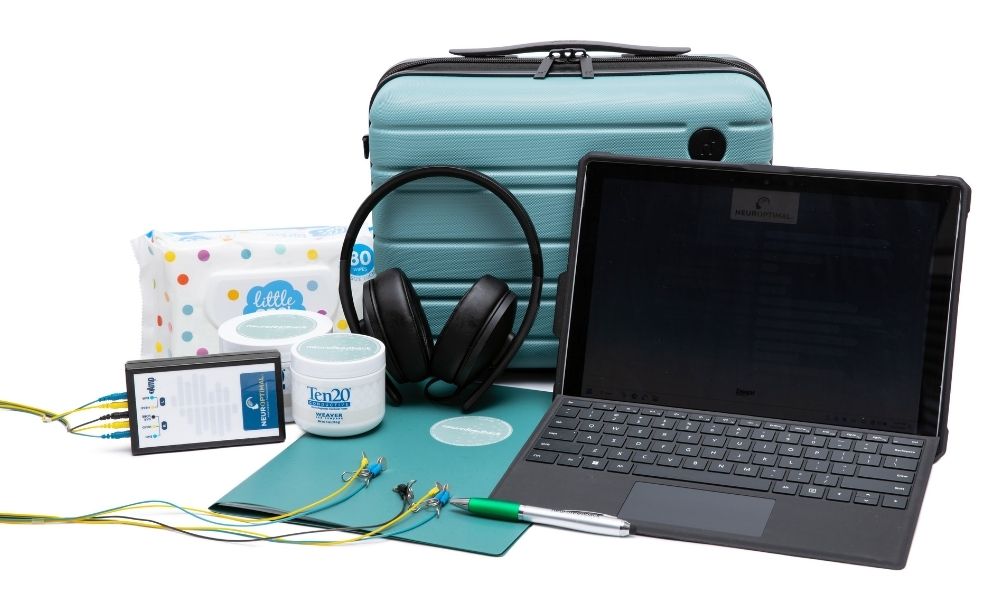
RECEIVE EVERYTHING YOU NEED AT YOUR HOME
Our kit includes everything you need.
It is delivered direct to your home or Parcel Locker.
You will be able to use the system straight away.
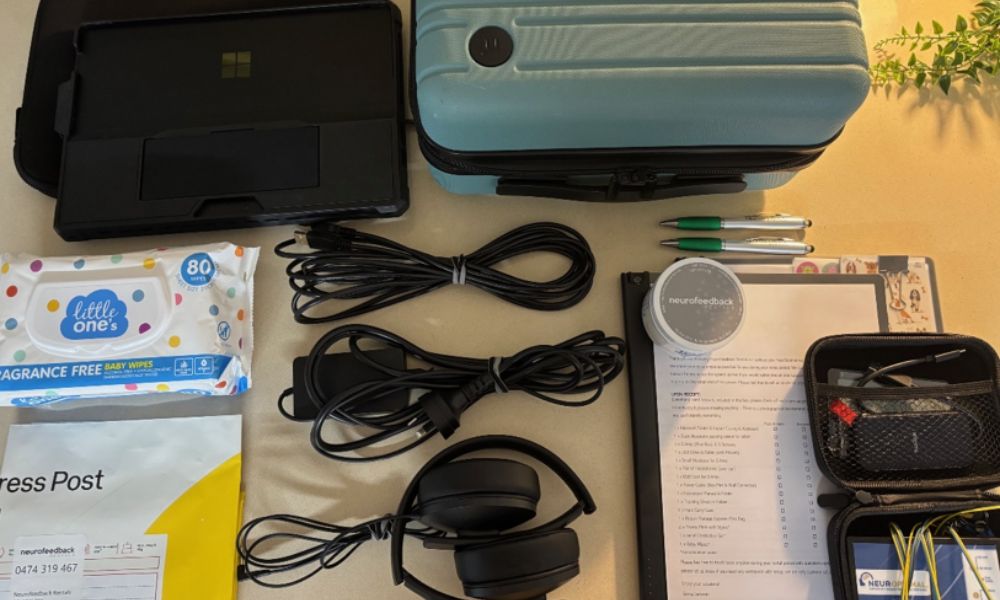
UNPACK THE KIT & SET UP ONCE
Choose one spot to set it up for the rental period.
You can also set it up on a movable trolley.
There are 3 cables in total to plug in.

REACH OUT TO US IF YOU NEED HELP
We provide a comprehensive instruction manual
We are also here at any time you need help.
You can call, text or email
Doing a Session
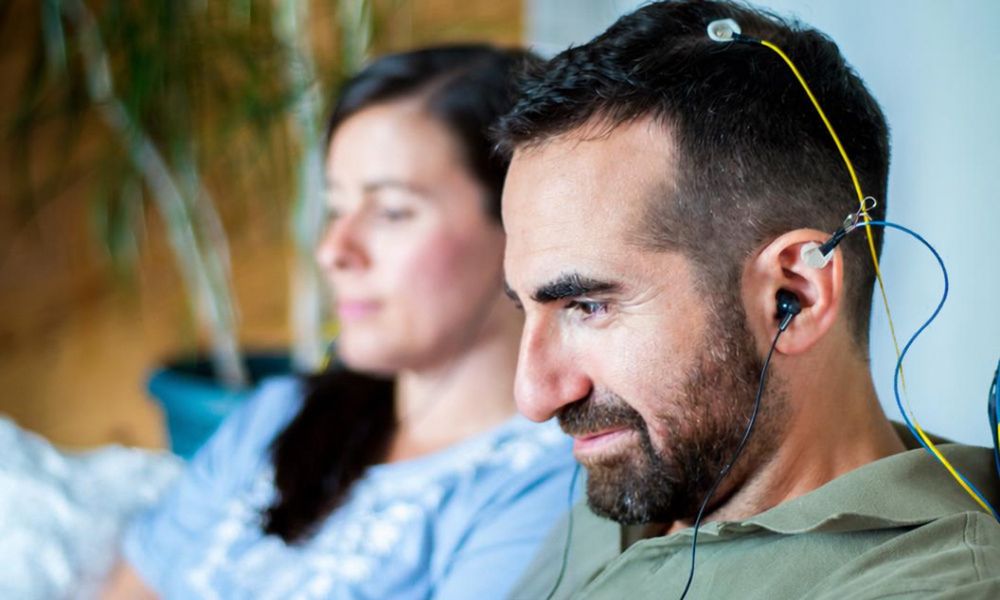
ATTACH 5 SENSORS & PUT ON HEADPHONES
Attach 5 sensors in the same position each time.
Put the headphones on.
Start the session & listen to music.

MULTITASK THROUGH THE 33 MINUTE SESSION
You do not need to be focused on the process.
So, for 33 minutes you get to relax, or…
read, work on your laptop, colour in, do lego etc..
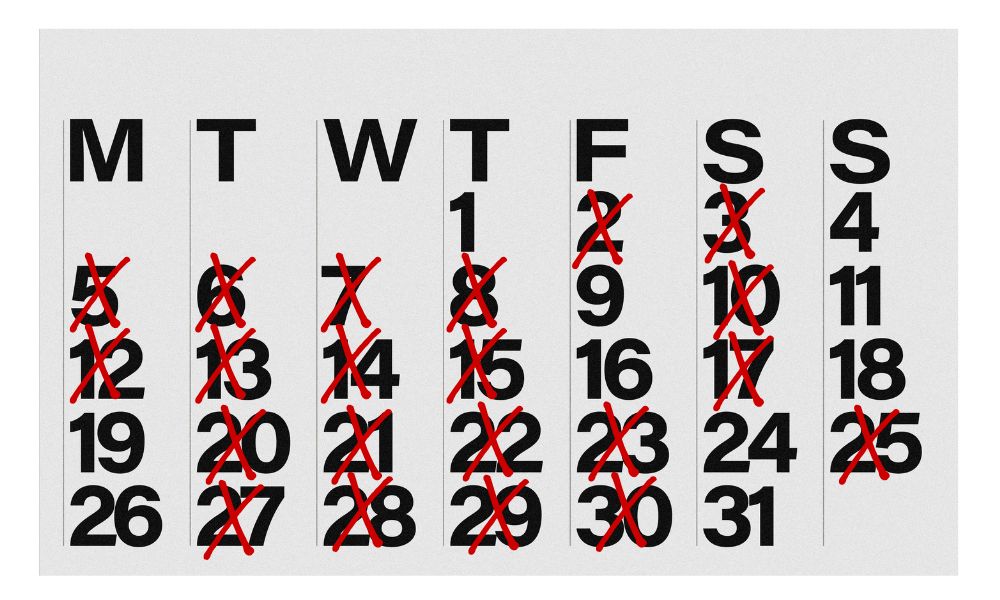
COMPLETE 5-6 SESSIONS PER WEEK
Do your 33min session any time of the day or night
Aim for 5-6 sessions per week and 1-2 rest days.
It does not need to be the same time each day.

TRACK CHANGES IF YOU WANT
We supply sheets to help track changes.
These are not mandatory.
You can do it during the first 5 mins of the session.
Quick Questions...
Even if you’ve been carrying trauma for years, it doesn’t necessarily mean it will take years to start feeling different.
In our experience, many clients begin noticing changes around sessions 13–20, although some feel a difference earlier and others take longer.
You might notice feeling calmer, reacting less intensely to triggers or recovering more quickly from difficult emotions.
We recommend training consistently, ideally 5–6 sessions per week. There’s no guaranteed timeframe, but the length of time you’ve been struggling doesn’t necessarily determine how quickly you’ll respond.
The best thing you can do is train consistently. We recommend completing 5–6 NeurOptimal® sessions per week, with 1–2 rest days, to give yourself the best opportunity to notice results.
Use the tracking sheet we provide to recognise small changes in your emotional reactions, resilience and everyday life. Progress isn’t always obvious at first.
If unresolved emotions come to the surface, having support from a trauma-informed professional may help you process them safely.
There’s no need to force progress or push yourself beyond what feels manageable.
We ship Australia-wide via Express Post, with most metropolitan deliveries arriving within 1–3 business days of dispatch. Regional locations may take a little longer.
Delivery depends on system availability, and we’ll provide tracking details once your kit has been dispatched.
Your rental period starts the day after your kit arrives, so you won’t lose any training time waiting for delivery.
The aim is to establish a new baseline of performance, rather than needing ongoing sessions indefinitely.
In our experience, once clients reach a more stable baseline, they generally maintain their improvements without regular training.
Sometimes life brings new pressures, such as business growth, major projects or prolonged stress. Some clients choose to rent again during these periods to support their performance and resilience.
For trauma, we recommend starting with a one-month rental. This gives you time to complete regular sessions, establish a routine and assess any changes in your performance.
Track practical measures such as productivity, concentration, decision-making and how effectively you manage pressure.
At the end of the month, you can evaluate the results and decide whether to extend at our discounted rate.
There’s no need to commit to a longer rental upfront, except to make a longer commitment to your routine and save money.
Not necessarily. More sessions don’t automatically mean faster results. Your brain responds to NeurOptimal® at its own pace.
We recommend training consistently with 5–6 sessions per week and allowing 1–2 rest days. This gives you a regular routine without feeling pressured to do more.
Especially when working through trauma, the goal is steady, manageable progress rather than rushing the process. Consistency is more important than trying to squeeze in extra sessions.
Pricing Options
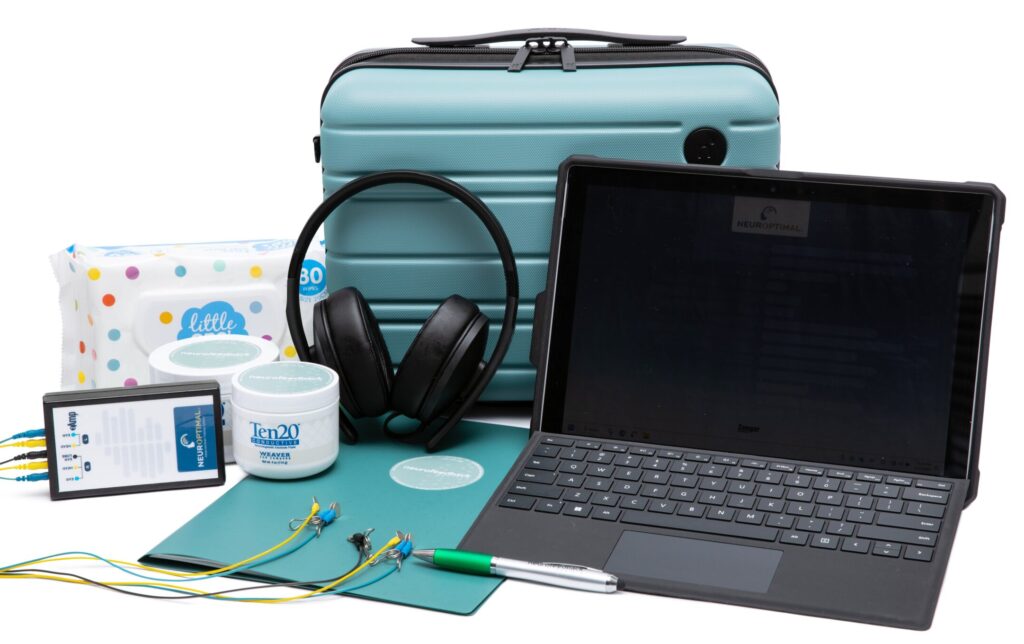
1 Month Rental
-
1 & 3 MONTH INCLUSIONS:
-
-
Unlimited Sessions & Users
-
We Pay for Return Express Postage
-
We Pay for Insurance (Theft & Accidents)
-
Unlimited Extensions $750 | 1 Month
-
One-on-One Support Available
-
Sennheiser® Headphones
-
$300 Purchase Rebate

3 Month Rental
-
1 & 3 MONTH INCLUSIONS:
-
-
Unlimited Sessions & Users
-
We Pay for Return Express Postage
-
We Pay for Insurance (Theft & Accidents)
-
Unlimited Extensions $750 | 1 Month
-
One-on-One Support Available
-
Sennheiser® Headphones
-
$300 Purchase Rebate
12 Month Rental
-
12 MONTH INCLUSIONS:
-
-
Unlimited Sessions & Users
-
We Pay for Return Express Postage
-
We Pay for Insurance (Theft & Accidents)
-
Paid Weekly - No Deposit Required
-
One-on-One Support Available
-
Sennheiser® Headphones
-
$300 Purchase Rebate
N.D.I.S / D.V.A Rental
-
N.D.I.S / D.V.A INCLUSIONS:
-
-
N.D.I.S Participants & D.V.A Clients only
-
Unlimited Sessions & Users
-
We Pay for Exp. Postage & Insurance*
-
Unlimited Extensions $600 | 1 Month
-
One-on One Support Available
-
Sennheiser® Headphones
-
Privately Paid - Not Claimable