

Service can ask a lot of you, both physically and mentally.
Experiences from that time can sometimes continue to have an impact long after you come home.
Something might feel off and you may want a practical way to help your brain adapt and regulate more effectively.
NeurOptimal®, the neurofeedback system we supply, works with your brain rather than trying to tell it what to do.
It doesn’t require you to talk about your experiences or feelings.
Instead, it gives your brain information about its own electrical activity allowing it to respond wherever it needs to.
During a session, this information is provided through simple interruptions to the music. The information is for your brain only.
Then your brain makes any adjustments it wants to make. It is in control of the whole process.
There is nothing you need to do during a session. You simply set it up and let the system run.
It is another practical tool to support you moving forward. All from the comfort and privacy of your home.
What is Neurofeedback at home?
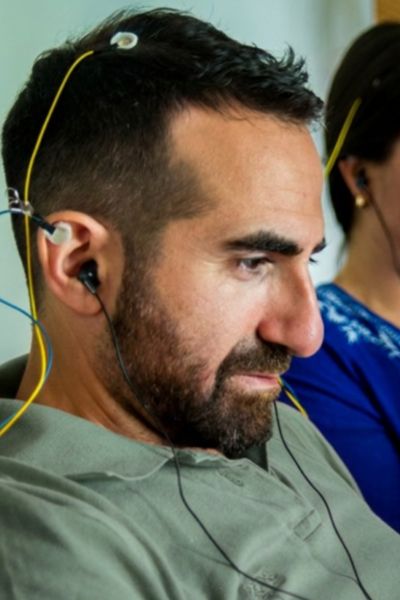
Neurofeedback is essentially brain training, and it is also referred to as neurofeedback therapy.
We supply the Neurofeedback system NeurOptimal® Australia-wide to make it easy for everyone to access at home.
It is a simple device that uses E.E.G sensors to help your brain & central nervous system learn more about how it functions.
Think about it like a mirror, where your brain can start to learn about itself for the first time.
The process is straightforward:
1. There are 5 sensors placed in the same positions on your scalp & ears each session. These observe your brain’s natural electrical activity.
2. The sensors relay that information to the computer program. The program then tells your brain what’s going on by interrupting music you are listening to.
3. You hear the interruption, and your brain interprets the break in the music as key information.
4. Your brain learns more with each session and can change itself in a very natural way without you needing to do anything.
Anyone can benefit. NeurOptimal® is in 84 countries and has been in use for 25 years, so it has helped many people worldwide who suffer from ADHD symptoms.
We Express Post our NeurOptimal® Neurofeedback Rental Kits with everything you need to do neurofeedback brain training at home minutes after receiving it!
Feel More Like Yourself with NeurOptimal®
Years of service can place unique demands on the nervous system.
Looking after brain health now can make everyday life easier.
NeurOptimal® provides real-time information about your brain’s activity.
Supporting greater resilience, clarity and performance.

Life experiences and periods of stress can gradually affect your confidence. Things that once felt straightforward may take more effort, and you can start to question yourself more than you used to.
NeurOptimal® Neurofeedback gives the brain information about how it is functioning in real time, which it can use to self-organise and regulate.
Clients have reported feeling clearer, calmer and more capable in themselves. As everyday situations begin to feel easier, confidence can start to return naturally, helping you trust yourself and your abilities again.

Stress and difficult experiences can sometimes make it harder to connect with the people around you. You may become more withdrawn, reactive or simply feel like other people don’t quite understand what is going on for you.
NeurOptimal® Neurofeedback can help the brain become calmer and more regulated by giving it information about how it is functioning in real time.
Clients have reported feeling more present and open with the people around them. With less internal noise taking up space, it can become easier to communicate, spend time with others and rebuild a sense of connection.

Stress, poor sleep and a busy mind can make it harder to think clearly. You may know what you need to do but find it takes more effort to organise your thoughts, make decisions or stay focused on the task in front of you.
NeurOptimal® Neurofeedback gives the brain information about how it is functioning in real time, allowing it to self-organise and regulate.
Clients have reported feeling like there is less mental clutter and more space in their minds. This can make it easier to think clearly, focus on what matters and deal with everyday situations as they come up.

Stress and difficult experiences can sometimes make happiness feel further away than it used to. You may still have good things in your life, but find it harder to naturally access the lighter feelings that once came more easily.
NeurOptimal® Neurofeedback gives the brain information about how it is functioning in real time, which it can use to self-organise and regulate.
Clients have reported experiencing a natural lift in mood and moments of happiness appearing unexpectedly. As some of the internal stress settles, those lighter feelings can become easier to access again.

Past experiences can continue to take up mental space long after they have happened. You may find yourself thinking about the same events, reacting to reminders or carrying things that you would rather leave behind.
NeurOptimal® Neurofeedback gives the brain information about how it is functioning in real time, allowing it to self-organise and regulate without needing you to consciously work through everything.
Clients have reported finding it easier to let things go and feeling less caught up in past experiences. This can create more mental space to deal with what has happened and focus on what is in front of you now.

Strong emotions can be difficult to understand and even harder to deal with when several things are happening at once. You may push them aside, get caught up in them or simply not know what to do with what you are feeling.
NeurOptimal® Neurofeedback gives the brain information about how it is functioning in real time, which it can use to self-organise and regulate.
Clients have reported having more space around their emotions, making it easier to feel what is there without becoming overwhelmed by it. This can help emotions move through rather than continuing to build up.

Sometimes you can know that you want to move forward but still feel like something is holding you back. Old experiences, thoughts or patterns can continue taking up space and make it difficult to focus on what comes next.
NeurOptimal® Neurofeedback gives the brain information about how it is functioning in real time, which it can use to self-organise and regulate.
Clients have reported feeling less weighed down by things that previously kept them stuck. With more mental space available, it can become easier to look ahead, make decisions and start putting your energy into what comes next.

Sometimes there isn’t one particular thing that needs fixing. You may simply feel unsettled, on edge or like something isn’t quite right inside, even when everything around you seems okay.
NeurOptimal® Neurofeedback gives the brain information about how it is functioning in real time, which it can use to self-organise and regulate.
Clients have reported feeling calmer and more settled within themselves. As some of the internal noise and tension begins to ease, it can become easier to simply feel okay inside without having to consciously work at it.
Quick Questions...
Occasionally, people feel worse in the short term during NeurOptimal® training. Sometimes unresolved emotions are sitting beneath the surface and may come up as the brain adjusts and reorganises.
In our experience, only a handful of clients have found these feelings particularly uncomfortable. Those clients have been able to work through them and have reported feeling better in the long term. Addressing unresolved emotions can be an important part of moving forward.
If the feelings become more than you can comfortably manage, please contact your DVA support provider or mental health professional and reach out to us. You don’t need to work through difficult emotions alone, and the goal is lasting improvement in how you feel and function.
NeurOptimal® doesn’t deliberately bring up memories or require you to revisit past experiences. However, some people notice unresolved emotions coming to the surface during training.
If this happens, you don’t have to confront everything at once. You can slow down, pause your sessions and work through any difficult feelings at a pace you can manage.
If something comes up that feels overwhelming, contact your DVA support provider or psychologist and let us know. The aim is to improve how you feel and function over the long term, not push you beyond what you’re ready to handle.
Change can be subtle at first. You might notice that something that usually feels difficult is a little easier, you recover from distractions more quickly, or you simply handle a situation differently than you normally would. Often, it is when you look back that you realise how much has changed.
We supply tracking tools to help you recollect the progress you have made over the time.
You can also read about the benefits & what it feels like here
The best and worst thing about our brains is that they are able to adapt and change. Clients have normally found that they reach a ‘new normal’ for their brains and return the system when this feels solid.
Because your brain is choosing to change and is not being forced, we have observed that the changes from NeurOptimal® are long-lasting.
Occasionally, we have clients who revisit when they want a ‘top-up’ this is when life naturally tests them, or they have a specific goal that they are now working towards.
Naturally, we can not predict that as a certainty, but other clients have found the changes to their brains have resulted in increased feeling of calm; even in daily chaos.
NeurOptimal® is essentially offering the brain information it did not have before that the brain uses to self-organise.
Think of a cluttered room that feels overwhelming; as it is organised, you feel more calm. This is similar to the feeling you may have in your brain using NeurOptimal®.
Your brain influences how you think, react, sleep, make decisions and interact with others. When these functions improve, the benefits can extend into several areas of your life.
Some clients report better sleep, clearer thinking, improved emotional control, stronger relationships and greater capacity to handle everyday pressures.
NeurOptimal® doesn’t target one specific problem. It supports the brain’s ability to self-regulate, so you may notice improvements in areas you weren’t expecting. Results vary from person to person.
If NeurOptimal® has been recommended to you, it’s worth looking into, even if you’re feeling fine. You don’t need to be struggling to benefit from brain training.
NeurOptimal® can also be used to support brain health, resilience, concentration and everyday performance.
The simplest approach is to try a one-month rental and see how you respond. There’s no need to have a specific problem to work on, and you can decide whether to continue based on your own experience.
.
NeurOptimal® supports the brain’s ability to self-regulate, which may help reduce the heightened alertness that can interfere with sleep.
Some clients report falling asleep more easily, waking less during the night and getting more restorative sleep. Others notice they feel calmer at bedtime and more refreshed in the morning.
The aim is to improve your overall sleep patterns, not simply make you feel tired after a session. Results vary, and changes may develop gradually with consistent training.
Read How NeurOptimal® Helped Veterans in San Diego, U.S.A

This report looks at the use of NeurOptimal® Neurofeedback as a complementary support tool for veterans experiencing PTSD and depression through the non-profit organisation Operation Giving Back in San Diego. Veterans completed between 20 and 30 Neurofeedback sessions, usually twice per week. Their symptoms were measured before and after training using the PTSD Checklist (PCL) and Beck Depression Inventory (BDI).
The report includes several case studies of veterans dealing with issues such as trauma, depression, anger, anxiety, poor sleep, suicidal thoughts, relationship problems and substance use. Across the examples provided, most participants showed lower PCL and BDI scores after the sessions, along with reported improvements in calmness, sleep, emotional regulation, motivation, concentration and relationships.
The report notes that NeurOptimal® Neurofeedback helped these participants reduce PTSD and depressive symptoms and may work alongside existing therapies and medical treatments. It is a non-clinical overview and should be taken as reference data only.




Quick Questions...
You don’t need to be focused, calm or organised for NeurOptimal® to work. You can simply relax and let the system run.
A scattered mind does not mean you are doing anything wrong or that you need to try harder during a session.
In fact, in our experiance, ADHD brains normally notice the biggest shift after the first few session.
Yes. You can use NeurOptimal® while taking medication.
Medication primarily affects the brain through chemical processes, such as changing the activity of neurotransmitters like dopamine and noradrenaline. NeurOptimal®, on the other hand, observes the brain’s electrical activity through EEG.
But these are not completely separate systems. Chemical signaling affects how neurons behave electrically, so medication can influence the collective electrical activity being observed during a session.
NeurOptimal® observes your brain activity as it is occurring at the time, so your medication forms part of your current brain state during a session.
Importantly, the underlying brain is still capable of learning and making changes while medication is present.
These changes are not necessarily dependent on the medication remaining in your system, so reducing or changing medication does not mean the brain simply returns to exactly where it started – meaning if you come off the medication your brain the time spent has not been wasted.
While using NeurOptimal®, if you begin to feel different or think your medication needs adjusting, speak with your prescribing doctor before making any changes.
We recommend checking with your prescribing health practitioner, before you use NeurOptimal®.
You can start by forwarding this link for the NeurOptimal® website to your practitioner for review. You can also encourage them to reach out to us directly on 0474 319 467.
If they need more information, we are happy to provide anything as required.
Everyone’s brain is different, and that’s one of the strengths of NeurOptimal®. The system works directly with your brain, providing information that allows it to make its own adjustments.
Your brain determines how it responds to the training. That means someone else’s results don’t determine what you’ll experience.
We share testimonials to demonstrate what’s possible, not to suggest everyone will have the same outcome. Your experience is individual, and your brain is in control of the process.
NeurOptimal® is a genuine neurofeedback system, not a scam.
However, it’s different from conventional mental health treatments and isn’t routinely included in the training of psychologists, psychiatrists or other healthcare professionals.
Your support team may simply be unfamiliar with it or may prefer approaches they already use in clinical practice. That doesn’t mean they’ve overlooked something you should have been offered.
NeurOptimal® is a brain training system, not a replacement for mental health treatment.
You’re welcome to discuss it with your DVA support team and ask us any questions about how the system works before deciding whether to try it.
Success comes from not giving up on the things you’re doing to improve your mental health and wellbeing. There isn’t one approach that guarantees results, but continuing to work towards feeling and functioning better is what matters.
NeurOptimal® can be one part of that process. In our experience, it can be a valuable support alongside other things you’re already trying.
Keep working towards getting yourself into a good place. NeurOptimal® doesn’t have to be the only thing you do, but it may help support the progress you’re making in other areas.
NeurOptimal® is already well established internationally. It’s used in 87 countries around the world, with over 4 million training sessions logged across 25 years.
In Australia, it’s still relatively unknown. One reason is that many of us working with NeurOptimal® have been so busy meeting client demand that we haven’t had the time to market it properly.
Much of its growth here has come through word of mouth and personal recommendations rather than large advertising campaigns.
You’ll usually notice changes in how you feel, react and function day to day. You might sleep better, think more clearly, feel less on edge or find that situations which previously bothered you don’t affect you as much.
Some people notice they’re calmer under pressure, less reactive or able to recover more quickly from stressful situations. Others find they have more energy and patience.
Changes can be gradual, so we provide a tracking sheet to help you recognise improvements. Sometimes the clearest sign is realising that things which used to be difficult are no longer taking the same toll.
You can use NeurOptimal® alongside support from a psychologist or therapist. Some people find that neurofeedback complements the work they are already doing.
How Many Sessions Do I Need?
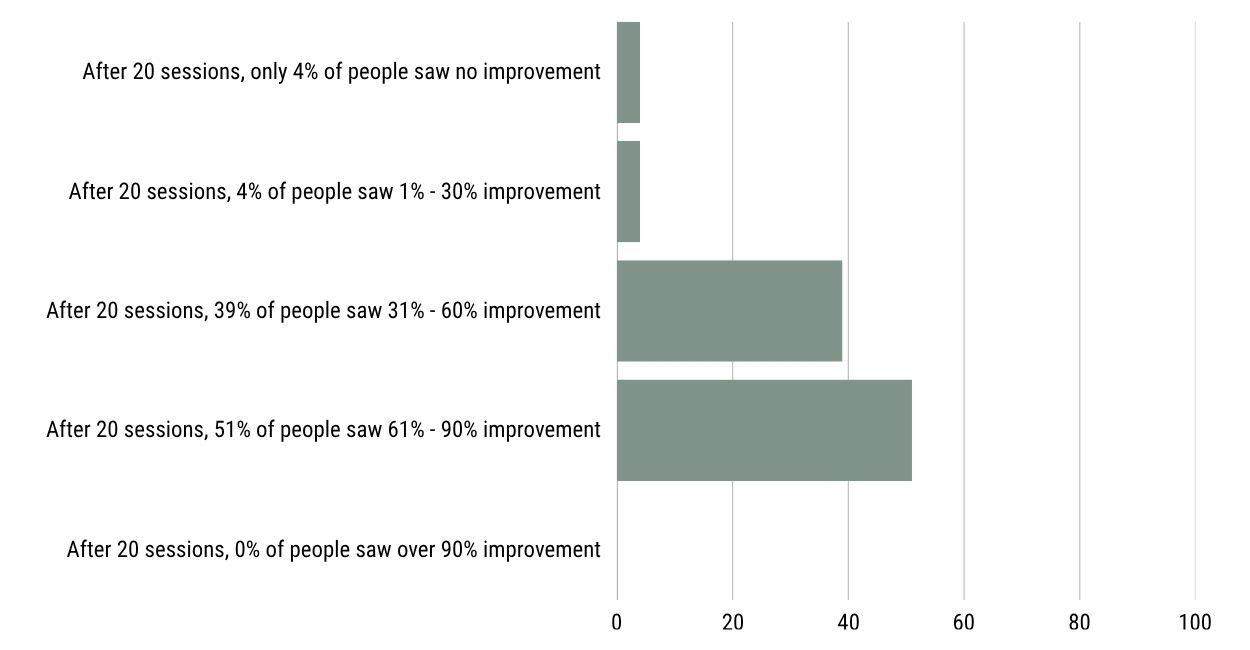
A worldwide survey of all NeurOptimal® trainers was conducted to observe client results.
This looked at the percentage of improvement at a certain number of sessions:
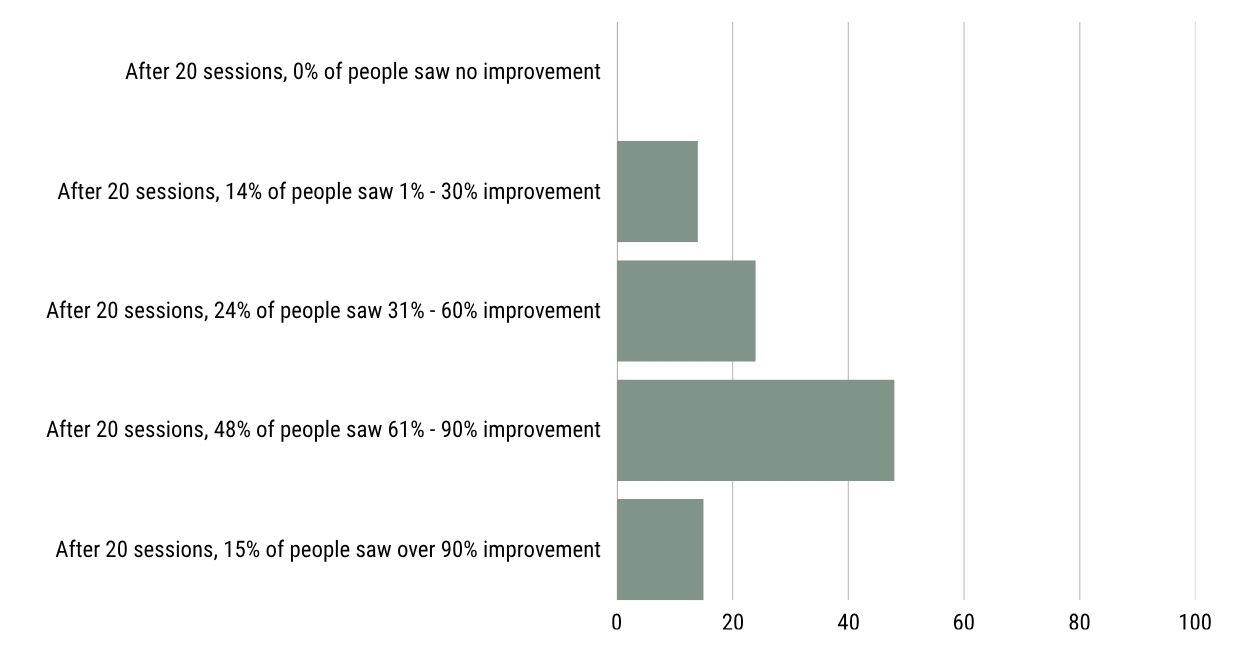
PTSD Improvement After 20 Sessions
After 20 Sessions – 48% of People reported a 61-90% Improvement
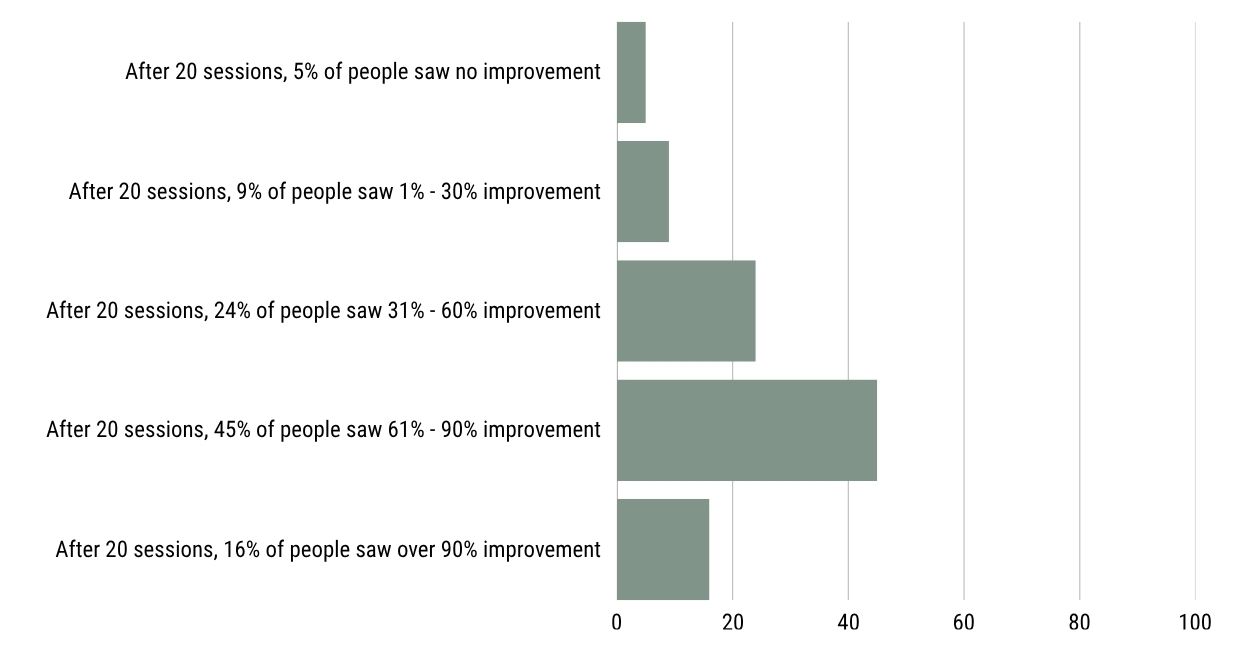
Addiction Improvement After 20 Sessions
After 20 Sessions – 45% of People reported a 61-90% Improvement
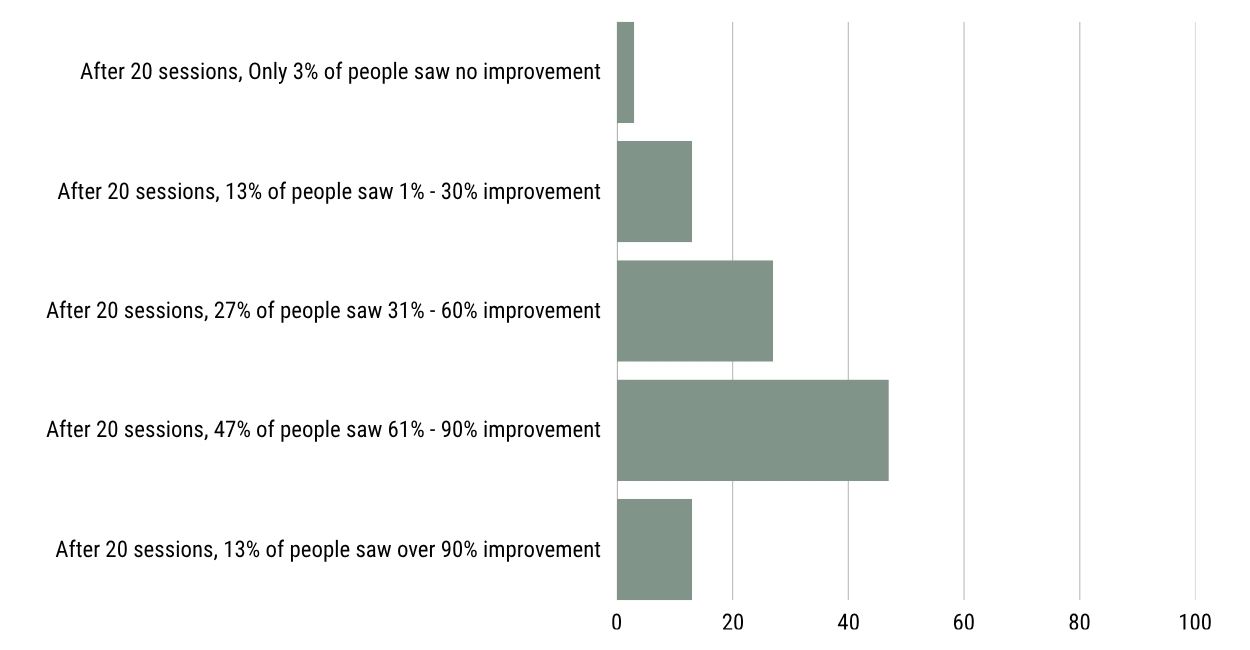
Anger Improvement After 20 Sessions
After 20 Sessions – 47% of People reported a 61-90% Improvement
Burnout Improvement After 20 Sessions
After 20 Sessions – 51% of People reported a 61-90% Improvement
Managing Expectations...
The brain & nervous system are very complex structures.
We have had many people have a significant shift within the first few sessions.
Results for other clients take more time.
We encourage all clients to keep in mind that all worthwhile change takes time.
Neurofeedback is brain training and, like muscle training at the gym, it is a process.
Unlike the gym, NeurOptimal® training is fun and painless; so it is easier to stick with!
We are here to make it as simple as possible to reach a positive result.
Quick Questions...
The best thing you can do is train consistently. We recommend 5–6 NeurOptimal® sessions per week, with 1–2 rest days. Doing more sessions doesn’t necessarily mean faster results.
Keep up any other support you’re receiving through your DVA team, psychologist or other health professionals. NeurOptimal® can work alongside these approaches.
Use the tracking sheet we provide to monitor changes in your sleep, mood, concentration and reactions. This will help you recognise progress as it happens, rather than overlooking smaller improvements.
A month gives you plenty of opportunity to train, but there is no set number of sessions that will “fix” you. Everyone responds differently, and NeurOptimal® is about supporting your brain’s ability to self-regulate rather than fixing something that is broken.
Absolutely. If you’re enjoying NeurOptimal® and want more time with it, you can extend your rental.
Simply let us know before your rental finishes you can keep the system and continue your sessions without interruption.
Used consistently over the month, you could get through 20 sessions easily by completing 5-6 per week with 1-2 days rest.
If you want to do more, you can do two, back to back on each of those days.
In our experience, many clients start noticing changes around sessions 13–20. Some notice improvements earlier, while others need more training.
The first changes might be better sleep, clearer thinking, improved concentration or feeling less reactive to everyday situations.
We recommend completing 5–6 sessions per week, with 1–2 rest days. Everyone responds differently, so there’s no fixed number of sessions that guarantees results.
We send our NeurOptimal® rental kits Australia-wide via Express Post. Once dispatched, delivery generally takes 1–3 business days to most metropolitan areas, with regional locations sometimes taking longer.
Dispatch depends on system availability, and we’ll confirm the expected timeframe when you book.
Your rental period starts the day after your kit arrives, so you won’t lose any training time while it’s in transit.
What do I have to do?
You are busy so we have minimised the time you need to invest in the entire process:
Order and Setup
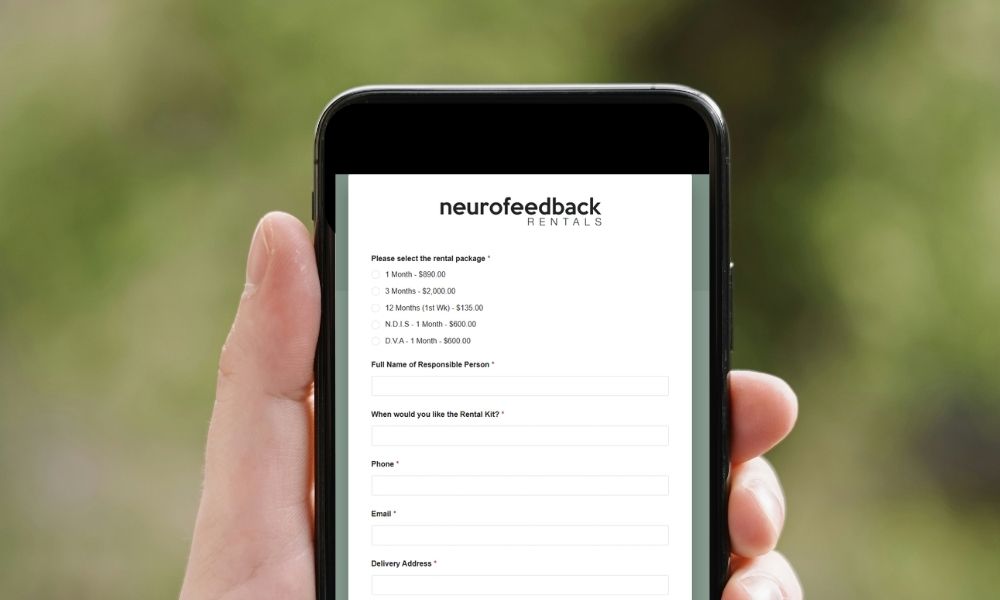
FILL OUT E-CONTRACT & PAY
We have a single page contract to fill in.
Pay via Direct Deposit, Credit Card or PayPal
We pay for Express Post anywhere in Australia
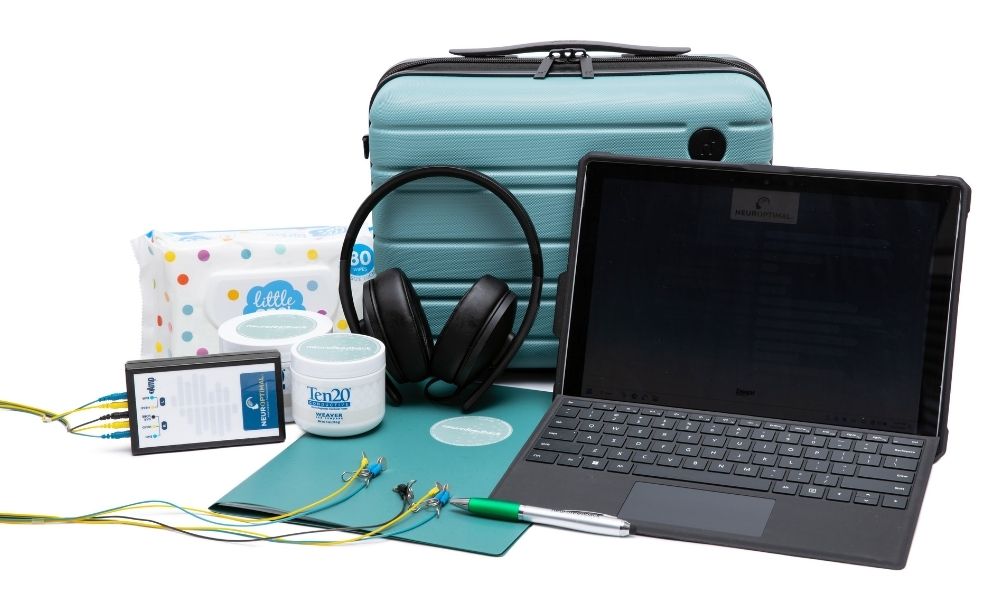
RECEIVE EVERYTHING YOU NEED AT YOUR HOME
Our kit includes everything you need.
It is delivered direct to your home or Parcel Locker.
You will be able to use the system straight away.
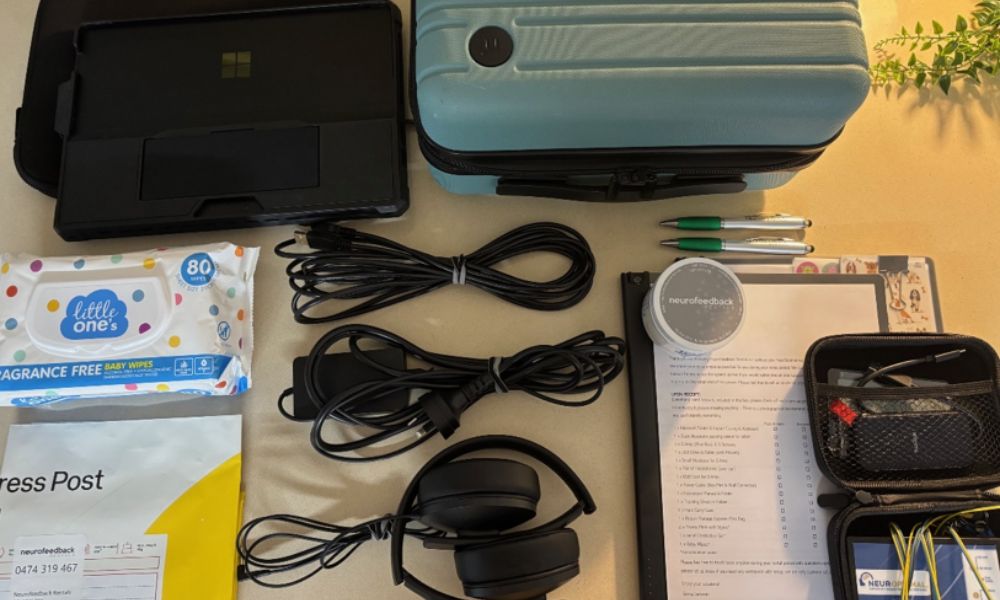
UNPACK THE KIT & SET UP ONCE
Choose one spot to set it up for the rental period.
You can also set it up on a movable trolley.
There are 3 cables in total to plug in.

REACH OUT TO US IF YOU NEED HELP
We provide a comprehensive instruction manual
We are also here at any time you need help.
You can call, text or email
Doing a Session
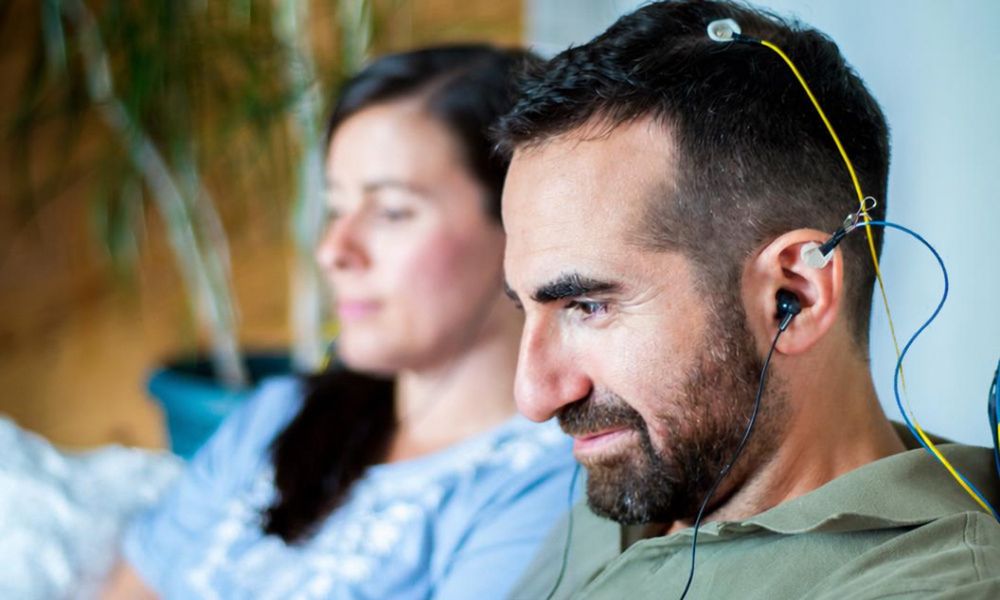
ATTACH 5 SENSORS & PUT ON HEADPHONES
Attach 5 sensors in the same position each time.
Put the headphones on.
Start the session & listen to music.

MULTITASK THROUGH THE 33 MINUTE SESSION
You do not need to be focused on the process.
So, for 33 minutes you get to relax, or…
read, work on your laptop, colour in, do lego etc..
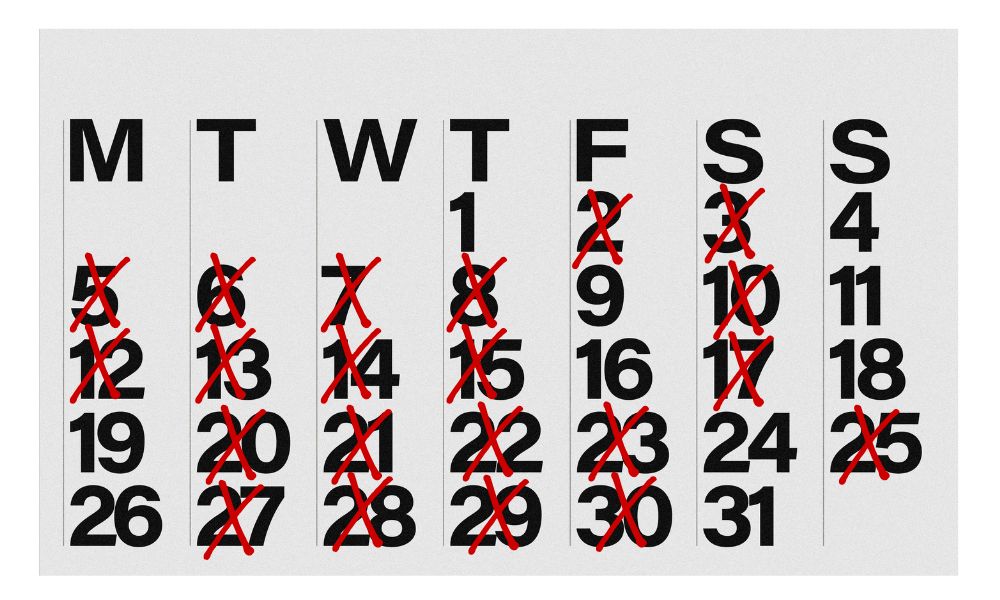
COMPLETE 5-6 SESSIONS PER WEEK
Do your 33min session any time of the day or night
Aim for 5-6 sessions per week and 1-2 rest days.
It does not need to be the same time each day.

TRACK CHANGES IF YOU WANT
We supply sheets to help track changes.
These are not mandatory.
You can do it during the first 5 mins of the session.
Quick Questions...
Unfortunately, NeurOptimal® home rentals are not covered by the DVA Gold Card.
The rental is privately paid, so you’ll need to cover the cost yourself.
We offer a discounted rental rate for eligible veterans to help make NeurOptimal® more accessible.
As much or as little as you need. We’ll get you set up and make sure you feel confident using the system, but after that, support is completely flexible.
You can reach out whenever you have a question or need some extra help.
We recommend completing 5–6 NeurOptimal® sessions per week, allowing 1–2 rest days.
Each session takes 33 minutes and can be completed at home whenever it suits you. You can watch a movie, read or simply relax while training.
Consistency is important. Establishing a regular routine gives you the best opportunity to notice changes and build on your progress.
We agree, it does look complicated, but we promise it is not.
We provide a comprehensive setup guide, customised from our years of working knowledge and offer on the phone support to help you at any time.
We have never had any clients say they could not figure out how to use the system.
Some clients worry about the placement of the sensors on the head. So we provide photographs and video in our instruction manual to ensure you feel comfortable. The position of the head sensors also has a good range of tolerance (about the size of 50c piece) so we are confident that you will get it in the correct spot.
If you have concerns, please contact us directly for a full explanation of how the setup works.
No. The sensors stay in the same position for every session, and there are no settings or protocols for you to change.
Once you’re set up, you can simply start your session and let NeurOptimal® do the rest.
The price covers your NeurOptimal® system for the full rental period, delivery, insurance for theft and accidental breakage. Plus support if you need throughout your rental.
There are no additional session fees, so you can use the system as often as you like while you have it.
You can also add other users to the system too during the rental period.
Yes. You can work on your computer, answer emails, read documents or complete other desk-based tasks during a NeurOptimal® session.
The training runs in the background and doesn’t require your attention. You just need to wear the headphones so you can hear the music and its brief interruptions.
Each session takes 33 minutes, so you can fit training into your workday without having to stop being productive.
Pricing Options
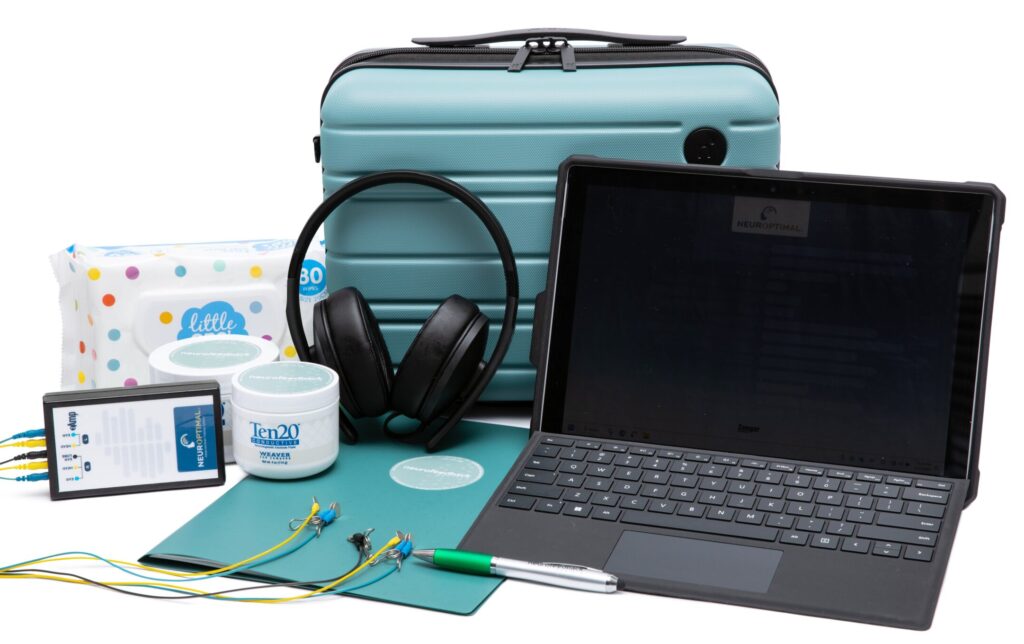
Veteran - 1 Month
-
1 MONTH INCLUSIONS:
-
-
D.V.A Clients only
-
Unlimited Sessions & Users
-
We Pay for Exp. Postage & Insurance*
-
Unlimited Extensions $600 | 1 Month
-
One-on One Support Available
-
Sennheiser® Headphones
-
Privately Paid - Not Claimable

Veteran - 12 Month
-
12 MONTH INCLUSIONS:
-
-
Unlimited Sessions & Users
-
We Pay for Return Express Postage
-
We Pay for Insurance (Theft & Accidents)
-
Paid Weekly - No Deposit Required
-
One-on-One Support Available
-
Sennheiser® Headphones
-
$300 Purchase Rebate